
Inferno Protocol: How to Trigger Tactical Slide Lean (Complete Guide)
If there is one thing I absolutely love about Inferno Protocol, it is the fact that the game refuses to let movement become an afterthought. This is not one of those shooters where you can simply sprint from room to room, hold the trigger, and hope your armor survives. The game constantly makes you think about positioning, momentum, cover, visibility, and—most importantly—how quickly you can get your character out of a bad situation.
And believe me, Inferno Protocol has plenty of bad situations.
The first time I started messing around with the tactical slide lean, I honestly thought it was just another flashy movement trick. Something you might use once in a while because it looks cool. After spending more time with the game, though, I completely changed my mind.
This mechanic is genuinely useful.
Once you understand the timing, the tactical slide lean becomes one of those movement techniques that starts happening almost automatically. You stop thinking about individual button presses and start thinking about movement as one continuous action: sprint, drop, lean, disappear around the corner.
That is exactly what you want when something horrible is chasing you through a dark corridor.
Inferno Protocol Sector 4 Encryption Codes: How to Unlock and Survive
What Exactly Is the Tactical Slide Lean?
Let’s start with the basics.
The standard slide in Inferno Protocol is already useful. When you’re sprinting and need to cross an exposed area quickly, dropping into a slide lowers your character’s profile and lets you maintain momentum.
The tactical slide lean takes that idea and pushes it further.
Instead of simply sliding forward, your character can lean to the left or right while remaining in the sliding movement. Visually, your upper body and camera shift sideways while your character continues moving close to the ground.
That sounds like a small difference.
It isn’t.
The technique gives you another way to approach corners, low obstacles, narrow openings, and dangerous sightlines without completely stopping your movement.
Imagine you’re sprinting through a ruined industrial corridor and hear something coming from around the next corner. Normally, you’d slow down, crouch, peek, and expose yourself.
With a well-timed slide lean, you can instead maintain your momentum, get low, shift your view around the corner, and potentially react before the enemy has a chance to properly line up an attack.
That’s the kind of movement advantage that can save you when the game decides to ruin your evening.
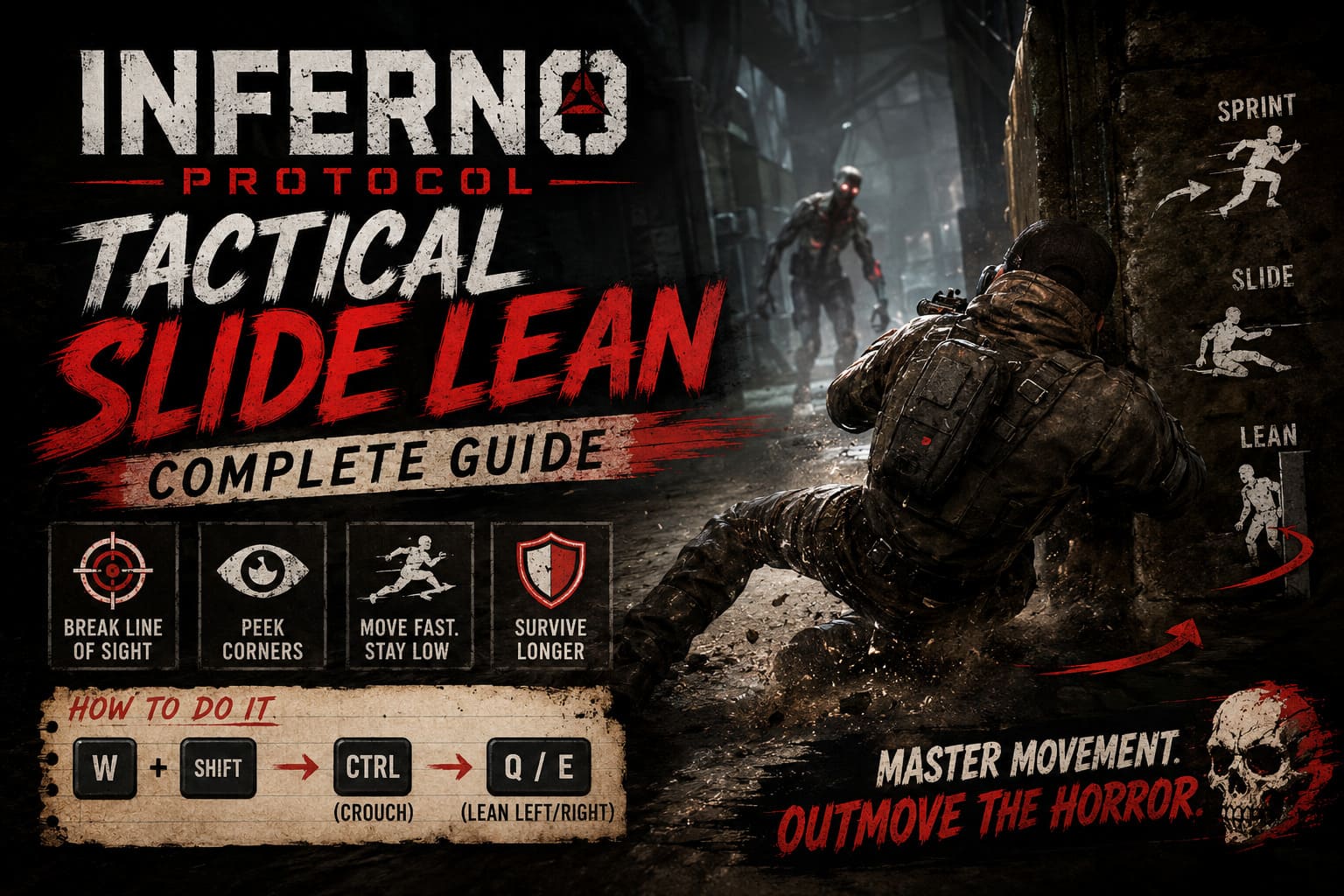
How to Perform the Tactical Slide Lean
The important thing to understand is that this isn’t a single-button move.
You’re combining sprint + slide + lean, and the timing between those actions is what makes the technique work.
With the default-style keyboard setup, the sequence is essentially:
Hold W + Sprint → Tap Crouch → Immediately press Q or E
In practical terms, here’s how I recommend learning it.
1. Start With a Proper Sprint
First, get your character moving forward at full speed.
Hold W and your Sprint key, which is commonly bound to Left Shift.
Don’t rush the next input. Give yourself enough room to build momentum.
The slide needs that forward movement. If you try to initiate the technique while walking, standing still, or barely moving, you’re likely to get a normal crouch instead.
This is one of the easiest mistakes to make when you’re practicing.
2. Trigger the Slide
Once you’re properly sprinting, tap your Crouch key.
Depending on your configuration, this may be Left Ctrl or C.
The important part isn’t which key you use. What matters is that the slide actually starts before you attempt the lean.
Think of the crouch input as the starting gun.
You’re sprinting normally one moment, and then suddenly your character drops into the slide.
3. Immediately Add the Lean
This is where the magic—or complete failure—happens.
The moment the slide begins, press your lean key.
For a typical setup:
- Q = Lean Left
- E = Lean Right
You want the lean input to happen during the active sliding animation.
Don’t press it too early.
Don’t wait until the slide is almost finished.
The timing should feel almost like one combined movement rather than three separate commands.
The rhythm is:
W + Shift → Crouch → Q/E
Once your hands understand that rhythm, the move becomes dramatically easier.
My Recommended Keybind Setup
I’m a big believer in changing controls when the default layout fights against your hands.
There is nothing sacred about default keybindings, especially in a game where split-second movement can mean the difference between escaping and becoming monster food.
If Q and E feel comfortable for leaning, keep them. If they don’t, experiment.
One option I particularly like is moving the lean functions onto Mouse 4 and Mouse 5 if your mouse has side buttons.
That can make the movement sequence feel much more natural because your keyboard hand remains focused on movement.
| Action | Common Default | Alternative |
|---|---|---|
| Move Forward | W | W |
| Sprint | Left Shift | Left Shift |
| Crouch/Slide | Ctrl or C | C |
| Lean Left | Q | Mouse 4 |
| Lean Right | E | Mouse 5 |
There isn’t one perfect layout for everyone. Your hand size, mouse shape, keyboard, and muscle memory all matter.
The real goal is simple: make the slide lean require as little conscious thought as possible.
When a creature is charging you from a pitch-black hallway, you don’t want to think, ‘Which finger moves to Q again?’
You want your hands to already know.
Should You Use Hold or Toggle?
This is another area where personal preference matters.
For crouch, I would experiment with both Hold and Toggle. Some players prefer the immediate control of holding the button, while others find toggle more comfortable during long exploration sections.
For leaning, however, I personally prefer a Hold style of input.
It makes the movement feel more responsive. You press the lean button, get the angle you need, and release it when you’re ready to return to a neutral position.
Again, this isn’t about finding a magical setting that makes you better overnight.
It’s about reducing friction between what your brain wants to do and what your character actually does.
Why the Tactical Slide Lean Is Actually Worth Learning
Here’s where I think this mechanic becomes much more interesting.
You could play Inferno Protocol without mastering advanced movement. Obviously.
But the deeper you get into the game’s hostile environments, the more valuable mobility becomes.
The environments are designed to make you uncomfortable. Corridors can feel cramped, visibility can be terrible, resources are limited, and enemies can turn what looked like a safe route into a death trap.
The tactical slide lean gives you another option.
1. Breaking Enemy Line of Sight
One of the biggest advantages is simply getting low while moving.
When an enemy is tracking your position, changing your height and movement direction can make your escape much less predictable.
Sliding around a corner while leaning can help you get behind cover without presenting the same target profile as a standing player.
And when you’re dealing with enemies that attack aggressively or rely on visual tracking, that extra moment can be incredibly valuable.
Sometimes one second is the difference between:
‘I barely survived that.’
and
‘Well, that’s another corpse for the monster collection.’
2. Checking Dangerous Corners
This is probably my favorite practical use.
Instead of walking directly into a new area, you can use the slide lean to approach an opening while staying low.
That gives you a chance to gather information before fully committing your character to the space.
In a survival horror game, information is almost as valuable as ammunition.
Knowing that an enemy is waiting around a corner is infinitely better than discovering it by walking directly into its face.
3. Moving Through Tight Terrain
The game’s environments contain plenty of clutter, debris, damaged structures, low obstacles, and narrow spaces.
A normal sprint isn’t always enough.
Sometimes you need to get low immediately and keep moving.
The slide lean can help you maintain momentum while negotiating these awkward spaces, particularly when stopping would put you in a worse position.
4. Keeping Pressure on an Enemy
The move isn’t only defensive.
You can also use it aggressively.
A well-timed slide can let you leave cover, change your position, and create a less predictable angle before taking a shot.
Instead of standing behind cover and exposing yourself from exactly the same location every time, you’re constantly changing your position.
That matters against enemies that can punish predictable movement.
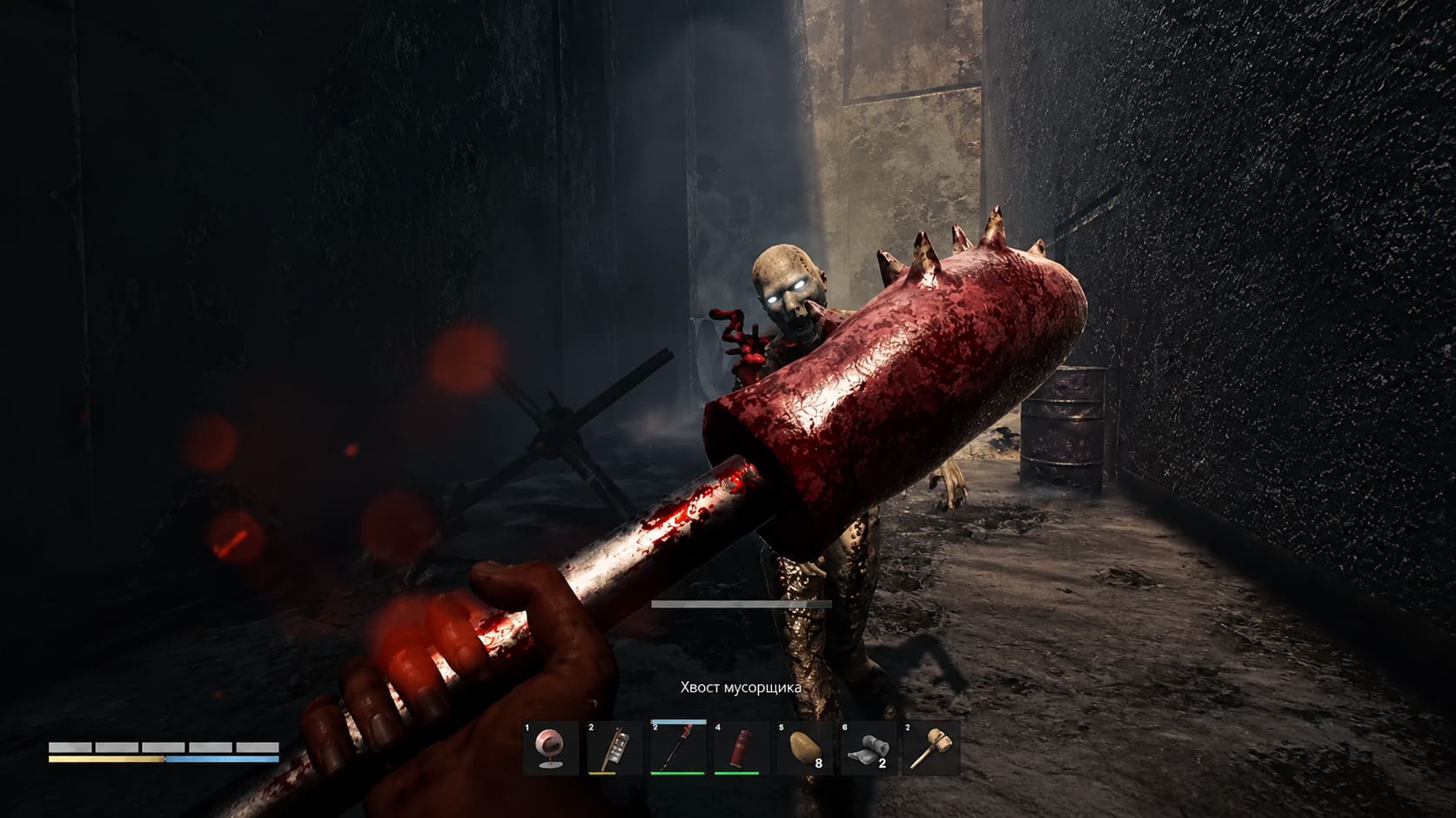
The Most Common Slide Lean Mistakes
If you’re practicing this and thinking, ‘Why the hell isn’t it working?’, don’t worry. There are a few extremely common reasons.
Mistake #1: Leaning Before Sliding
This is probably the biggest one.
If you press Q or E before the slide has actually started, you’re not performing a tactical slide lean.
You’re simply leaning while moving.
The order matters:
Sprint first. Slide second. Lean third.
Once you get that sequence into muscle memory, the move becomes much more reliable.
Mistake #2: Trying It Without Enough Momentum
You can’t expect the technique to work properly if you start from almost zero speed.
Give yourself some space.
Sprint forward for a moment, build momentum, then initiate the slide.
Trying to perform the move in a tiny room or immediately after changing direction is naturally more difficult.
Mistake #3: Practicing Only on Difficult Terrain
This one sounds obvious, but it’s surprisingly easy to overlook.
If you’re learning the mechanic for the first time, don’t immediately practice it while running uphill, weaving through obstacles, or escaping an enemy.
That’s basically asking your brain to learn three things simultaneously.
Start somewhere flat and predictable.
Once the timing feels natural, introduce slopes, corners, debris, and combat situations.
Mistake #4: Waiting Too Long to Press Lean
The opposite problem is also common.
You successfully start the slide—but then hesitate.
By the time you press Q or E, the useful part of the movement is already gone.
The lean needs to be connected closely to the beginning of the slide.
Think ‘slide and lean’, not ‘slide… wait… lean.’
A Simple Practice Routine
If you want to learn the technique quickly, don’t overcomplicate it.
Find a safe area and repeat the same sequence.
Start with:
W + Shift
Then:
Crouch
Then:
Q
Repeat.
After that feels comfortable, practice the opposite direction:
W + Shift → Crouch → E
Once both directions work consistently, start adding a target.
Sprint toward a doorway or piece of cover, slide, lean around it, and continue moving.
Eventually, you’ll stop consciously thinking about each button.
That’s when you’ve actually learned the mechanic.
Advanced Tips for Better Movement
Once the basic slide lean becomes second nature, there are a few ways to make it more useful.
Don’t use it just because you can.
That’s probably the biggest piece of advice I’d give.
Advanced movement is only useful when it solves a problem.
If you’re in a safe corridor with no enemies around, there’s no reason to slide everywhere like you’re auditioning for an action movie.
Save the technique for situations where speed, positioning, or low visibility actually matter.
Also, try to combine it with cover movement.
Instead of sliding into completely open territory, use the technique to move from one protected position to another.
You can also use it as part of an escape pattern:
- Sprint away from the threat.
- Slide toward cover.
- Lean around the corner.
- Check the area.
- Change direction if necessary.
That turns the mechanic from a simple movement trick into an actual survival tool.
Is the Tactical Slide Lean Essential?
I wouldn’t say you absolutely need it to finish Inferno Protocol.
But if you’re interested in playing at a higher level, I absolutely think it’s worth learning.
The difference isn’t necessarily that the mechanic makes your character dramatically faster.
It’s that it gives you more options.
You can approach corners differently. You can change your profile. You can maintain momentum while checking an area. You can make your movement less predictable. And, most importantly, you can react to the game’s nastiest surprises without always having to slam on the brakes.
That’s exactly what I want from advanced movement in a survival horror shooter.
It shouldn’t feel like an unnecessary gimmick.
It should feel like something you gradually learn to use until, eventually, you wonder how you ever survived without it.
Final Thoughts
The tactical slide lean is one of those Inferno Protocol mechanics that initially looks like a minor detail but becomes much more interesting once you understand its purpose.
The basic sequence is straightforward:
Sprint → Slide → Lean.
The difficult part is getting the timing into your muscle memory.
Start slowly. Practice on flat ground. Experiment with your keybindings. Don’t immediately throw yourself into a monster encounter and expect perfection.
After enough repetitions, the movement starts to click.
And that’s when Inferno Protocol gets really fun.
Suddenly, you’re not just running through the maze hoping the next corridor is safe. You’re actively controlling how you enter spaces, how you expose yourself, how you break enemy sightlines, and how quickly you can disappear back behind cover.
For a game built around pressure and uncertainty, that kind of control is incredibly satisfying.
So yes—learn the tactical slide lean.
You may not use it every ten seconds, and you certainly don’t need to turn every hallway into a movement-tech showcase. But when something monstrous is sprinting toward you, your ammunition is running low, and the only safe route is around a tight corner?
You’ll be very happy that your fingers remember:
Shift + W → Crouch → Q/E.
And honestly, in Inferno Protocol, having one more trick between yourself and whatever is lurking in the darkness is never a bad thing.


